


Surviving the Aftermath has several catastrophes that players need to prepare for, including a long and deadly Winter. Keeping the colony alive through a catastrophe can be challenging, and players that don't do some preparation ahead of time may be left without any survivors. Preparing for Winter means having enough food, protection, and shelter for every colonist and any potential additions or threats that may come to the gate during this time.
Catastrophes are the biggest challenge players face while attempting to build a colony in Surviving the Aftermath, and Winter is arguably the hardest one to survive. Winter consists of two phases: the start of Winter begins freezing certain structures, then the Winter Storm comes and can leave unprepared colonies without any survivors. It can be especially difficult if Winter is one of the first catastrophes to come to the colony, so players should start preparing for it early on.
One of the hardest parts of surviving Winter is having enough food, especially if there are a decent number of people living in the colony. Unless players have unlocked greenhouses, they will lose the ability to farm. Fields and other structures will freeze for the duration of Winter, and colonists will freeze if they don't have any heat source nearby. It's important to put heating units near shelters so colonists can stay warm when they're asleep. The other resource players should stock up on is clothes. Even with heat sources, if there aren't enough clothes for colonists they may freeze or develop hyperthermia.
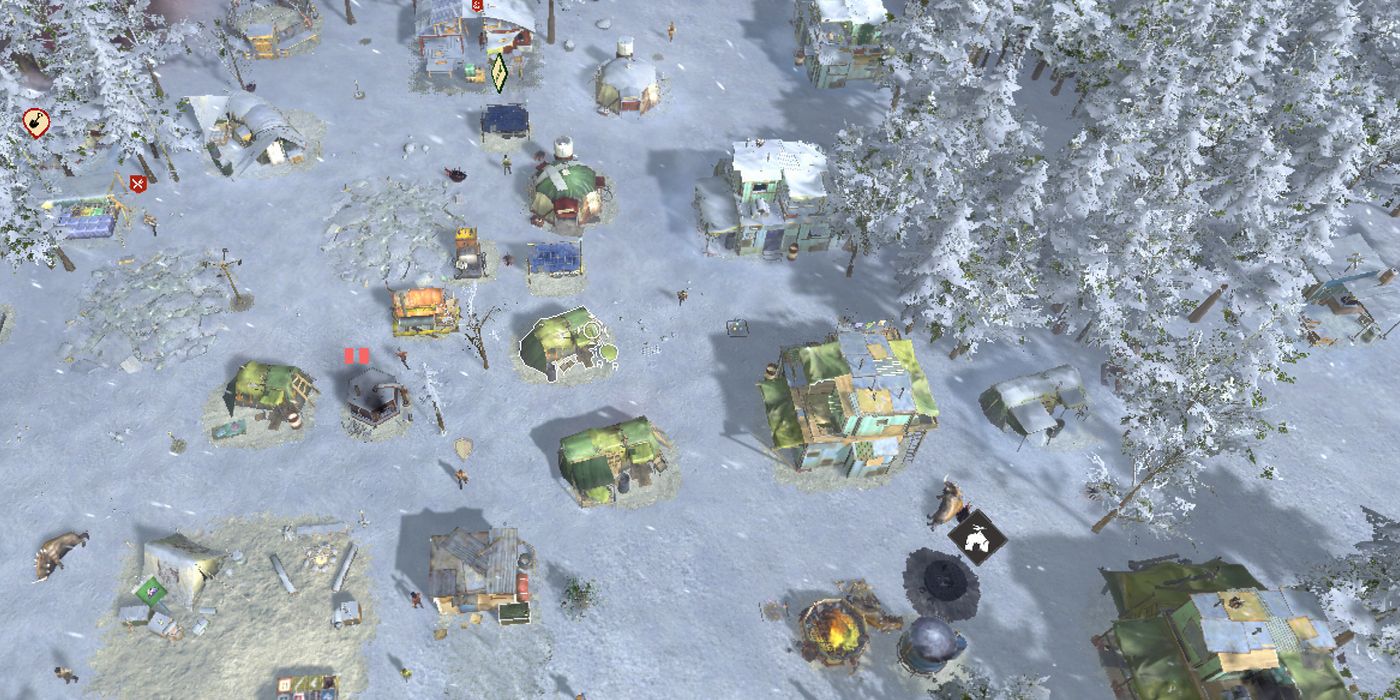
As soon as Surviving the Aftermath players start to get Science Points and building materials, they should unlock the Directed Heating upgrade in the Infrastructure tab. Research tasks can be accessed by going to the beaker symbol in the lower part of the screen. After upgrading the burners, players should unlock greenhouses so there's a continuous food source throughout the Winter, which can last several days. The last Winter-related upgrade that players should obtain as early as possible is the Tailor shop. This can be used to produce clothing for the colony.
Aside from upgrading structures and ensuring a steady food source, players can prepare for Winter by limiting the number of colonists they take in when starting out. A large colony can be productive and it's something players should work towards, but having a large number of people to clothe and feed in an early Winter catastrophe can lead to the colony's downfall. Groups with a lot of elderly or children won't have many workers, and the ones that are able to work won't be able to perform most jobs. Players should be strategic with who they take in, at least at the start of the game, to avoid high casualties during Winter.
Similar to its predecessor, Surviving Mars, keeping a colony alive in Surviving the Aftermath means being prepared for the various environmental catastrophes that continuously threaten the colony. Winter is one of the most difficult catastrophes to survive, so players will need to be prepared for it at a moment's notice. Later in the game, players will be able to unlock a satellite that gives them an earlier warning, but until then they should focus on keeping a large supply of food and firewood to live through the Winter in Surviving the Aftermath.
Surviving the Aftermath is available for Xbox One, PS4, Nintendo Switch, and PC.
from ScreenRant - Feed https://ift.tt/3xwmxtS